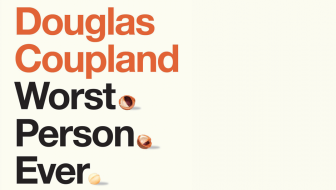
Attention Simon Pegg and Nick Frost: Grab the rights immediately. Douglas Coupland's Worst. Person. Ever. might be the most Celluloid-Ready. Postmodern Novel. Ever. If this sounds like a condemnation (shallow), consider your feeling for the cerebral, hilarious, and easily digestible work of another Douglas. It's hard to imagine Hitchhiker's Guide to the Galaxy fans wouldn't feel at home in this absurdist British-flavored comedy, even with its relentless barrage of invectives and crass ... [READ MORE]
NOTEBOOK
Things American: The Boys Of My Youth (Baseball Seasons 1989-2014)
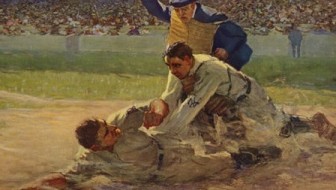
“Baseball breaks your heart. It is designed to break your heart. The game begins in spring when everything else begins again, and it blossoms in the summer, filling the afternoons and evenings. And then as soon as the chill rains come it stops and leaves you to face the fall all alone, when you need it most.” —A. Bartlett Giamatti, Commissioner of Major League Baseball, 1989 My father teaches me two essential skills at the tender age of eighteen months: to read and to blow raspberries with my ... [READ MORE]
Online Fiction Interview: Keith Lesmeister

This month, our online fiction came from Keith Lesmeister, whose tight fist of a story "Imaginary Enemies" clocks in at a trim 965 words. That's less than half of the 2,000 word maximum we here at ASF have imposed on our web fiction. That cap exists, in part, because we know that great stories come in all sizes and that the web—for all of its faults and all of its cat videos—is a particularly good venue for short work. Still, it'd be a mistake to think that any story, regardless of length, pops ... [READ MORE]
Spreading the Literary Love
A while back, Austin Kleon, author of Steal Like an Artist, was on KUT, our local NPR station, talking about how important it is to be engaged and active in your community of artists--whatever your creative pursuits. One quote of his that stuck with me was this: "You have to be a fan to have fans." I liked the sentiment, although it did remind me of Rainbow Rowell's Fangirl and this snippet of dialogue: "I'm just really active in the fandom." / "What the fuck is 'the fandom?'" Anyway, I asked ... [READ MORE]
The Magic of Helen Oyeyemi’s Mirrors
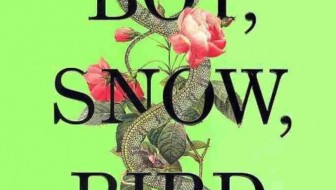
Toward the beginning of Helen Oyeyemi’s fourth and latest novel, Boy, Snow, Bird, narrator Boy Novak Whitman offers us a dictionary-style definition of the word “mirror.” mirror: [mirə] noun 1. A surface capable of reflecting sufficient diffuser light to form an image of an object placed in front of it. 2. Such a reflecting surface set in a frame. In a household setting this surface adopts an inscrutable personality (possibly impish and/or amoral), presenting convincing and yet ... [READ MORE]
Things American: Nic Pizzolatto’s Women Before True Detective
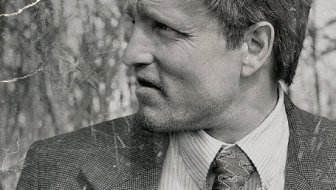
In honor of all of the breathless praise accompanying the release of HBO’s new crime noir series True Detective, The Atlantic is urging readers to revisit two short stories by Nicolas Pizzolatto, the show’s creator. The stories appeared in the magazine ten years ago, when Pizzolatto was an MFA student at the University of Arkansas, and they explore themes that would later mark the HBO series. Chief among those is gender and the relationship between men and women. Pizzolatto is a radically ... [READ MORE]